
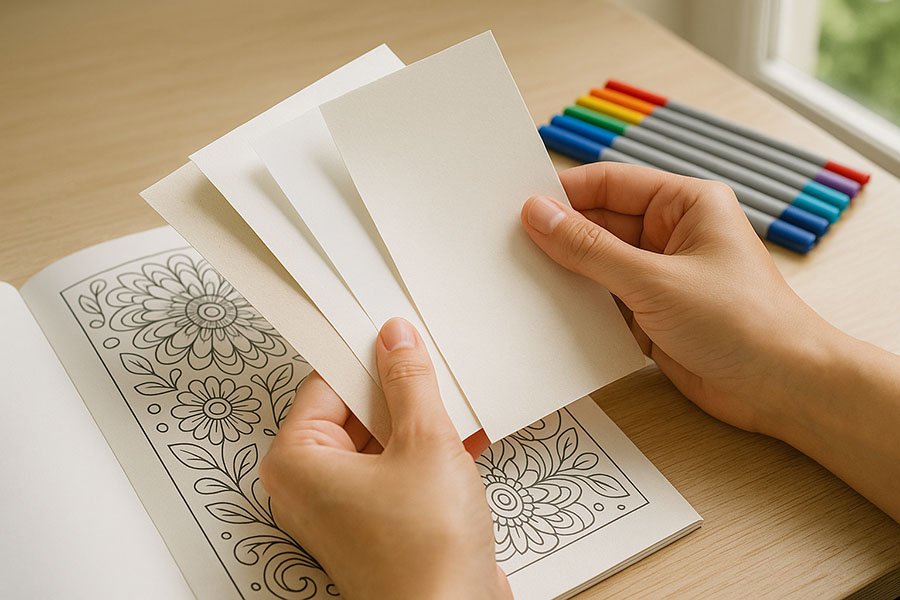
Choosing the Best Paper for Your Colouring Projects
Not every sheet of paper is created equal, particularly when it comes to colouring. The right choice can make markers glide smoothly, pencils blend with ease, and finished pages look as though they belong in a gallery. The wrong option, however, can lead to bleed-through, fuzzy edges, or lifeless colours. This guide explores the key qualities of paper, matches popular types with different mediums, and shares tips for printing and preserving your work.
1. The Four Essentials of Paper
-
Weight (GSM / lb): Heavier sheets are less likely to buckle or allow ink to seep through. For everyday colouring, aim for 120–160 gsm (around 32–43 lb text). Choose 200 gsm or above for water-based media or double-sided printing.
-
Tooth (Texture): A smooth surface suits markers and fine pens, while a light texture helps coloured pencils grip for layering. Rougher textures are best for watercolour pencils.
-
Finish (Coated vs. Uncoated): Coated papers keep marker lines sharp but resist pencil pigment. Uncoated paper accepts pencils well but may feather liquid inks if it’s too porous.
-
Colour & Brightness: Bright-white sheets show colours in their truest form, while toned paper (such as grey or tan) allows both highlights and shadows to add depth.
2. Pairing Paper with Your Medium
Coloured Pencils
-
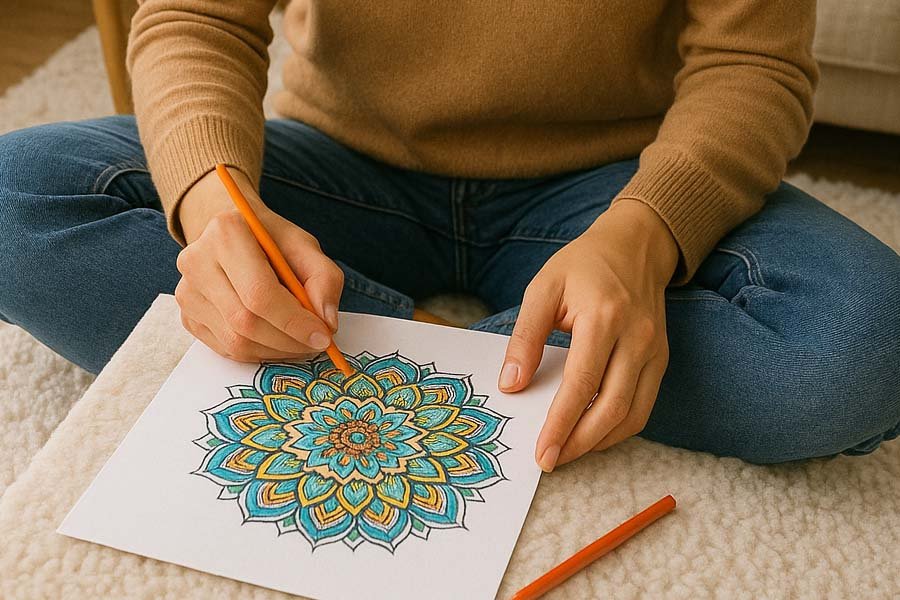
Best option: Bristol Vellum (around 250 gsm), which offers slight texture for blending without wearing down pencils too quickly.
-
Budget choice: 160 gsm matte presentation paper—smooth but strong enough for light layering.
-
Tip: Burnish gently when finishing to avoid a waxy bloom.
Alcohol-Based Markers
-
Best option: Marker paper (70–90 gsm). Thin yet specially coated to prevent bleeding, keeping colours vivid and edges neat.
-
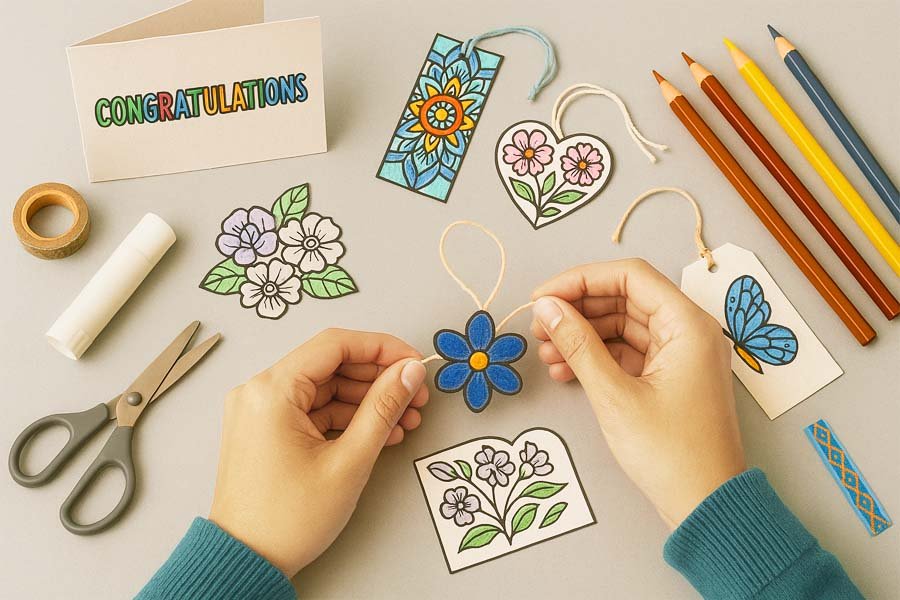
Alternative: 200 gsm cardstock if you want sturdier, single-sided pages.
-
Avoid: Standard copier paper—it absorbs ink unevenly and dulls colours.
Water-Based Markers & Brush Pens
-
Best option: Mixed-media paper (180–250 gsm) for the right balance of smoothness and absorbency.
-
Tip: Allow each layer to dry before adding detail to avoid pilling.
Crayons & Oil Pastels
-
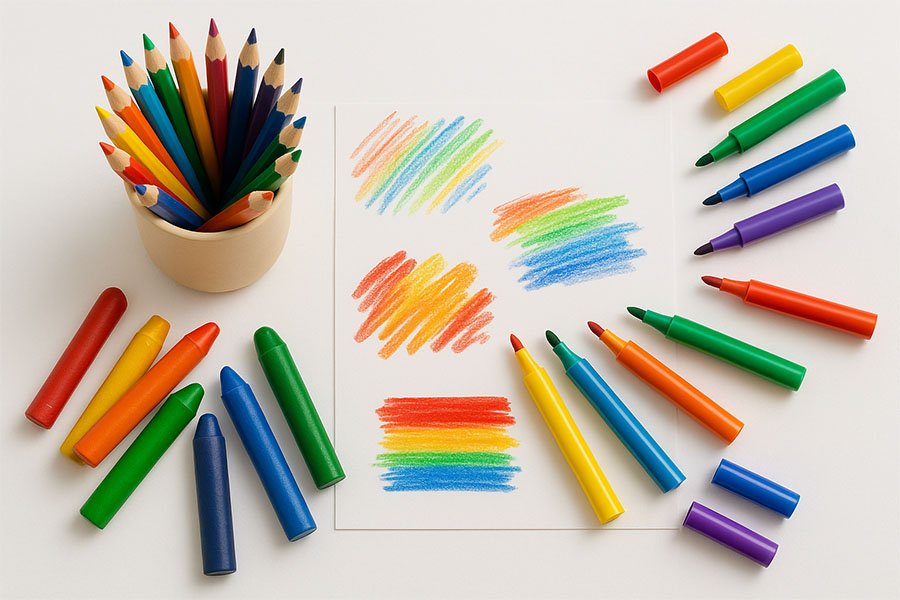
Best option: Drawing paper around 160 gsm with a medium tooth for waxy materials to cling without breaking apart.
-
Creative twist: Use coloured construction paper—white crayons give a chalkboard-style effect.
Watercolour Pencils & Light Washes
-
Best option: Cold-press watercolour paper (200–300 gsm), which copes with light washes and blending without buckling.
-
Tip: Tape the edges to a board before applying water to minimise warping.
3. Printing at Home
-
Inkjet vs. Laser: Inkjet produces richer blacks on textured paper but can smudge under wet media unless using pigment inks. Laser gives sharp lines that resist water.
-
Paper Path: Rear-feed trays usually handle heavier cardstock better. Check your printer’s maximum gsm before loading thick sheets.
-
Scaling: Choose Actual Size for designs already set to page. If parts are clipped, select Fit to Printable Area—though this slightly reduces the image.
4. Preventing Bleed-Through & Ghosting
-
Test First: Colour a small corner to check how the paper reacts.
-
Use a Blotter Sheet: Slip a spare page underneath when using markers.
-
Adjust Printer Settings: Lower ink density by 5–10% if prints appear oversaturated.
5. Preserving and Displaying Finished Pages
-
Flat Storage: Keep pages in acid-free sleeves within a binder to prevent fading.
-
Fixative Spray: Lightly coat pencil or pastel work to reduce smudging—spray outdoors and let it dry fully.
Sunlight Protection: Frame prized pieces behind UV-resistant glass to stop colours from fading.
Final Thoughts
The best paper isn’t necessarily the most expensive—it’s the one that works with your colouring style and chosen tools. Start with small packs, experiment, and make notes on how each feels. Over time, you’ll build a personal collection that brings out the best in your colours. When paper, medium, and imagination come together, your colouring can shift from ordinary to truly memorable.
Thank you for reading: Choosing the Best Paper for Your Colouring Projects
Please Click Here to Return To HOME PAGE
Other Childrens Websites you might enjoy …




0 Comments